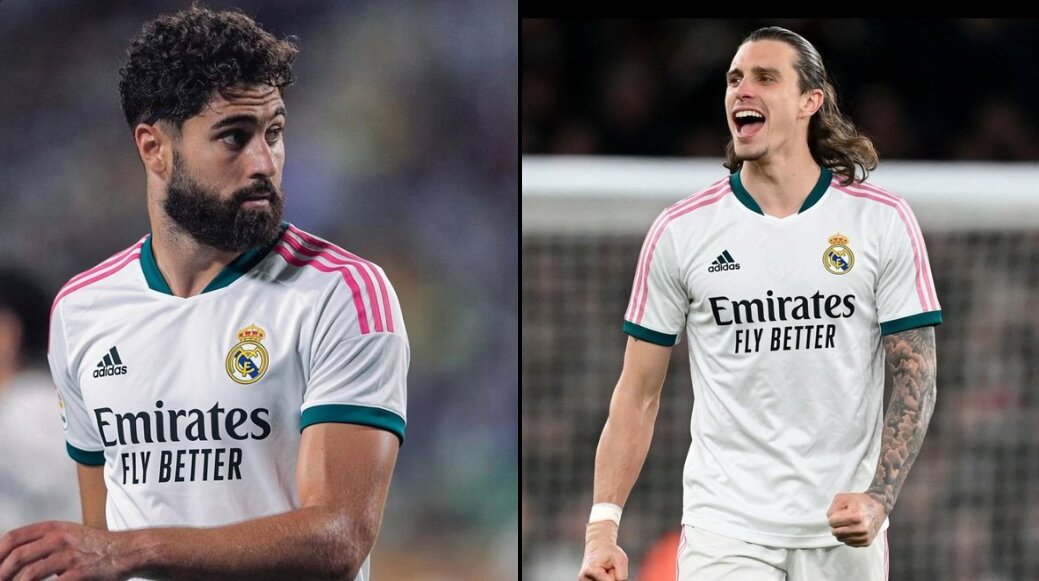
A clear direction is beginning to take shape in Madrid’s defensive planning, with the left side of the back line now identified as a priority area for reinforcement. According to internal evaluations, Real Madrid are actively working to secure a major addition for next season, with only two names firmly under consideration: Riccardo Calafiori and Joško Gvardiol.
Both defenders have reportedly received approval from José Mourinho, who has influenced recent discussions around squad balance and defensive structure. The message from the coaching perspective is direct: one of them will be playing for Real Madrid next season.
Left Side of Defence Becomes a Priority
The focus on the left-back role is not accidental. Modern elite football demands full-backs who can contribute across multiple phases of play, and Madrid’s internal analysis has reportedly highlighted the need for greater balance, depth, and tactical flexibility in that position.
Rather than relying on short-term solutions or improvisations, the club are now targeting a long-term structural upgrade. The objective is not just to fill a position, but to redefine how the left side of the defence operates in both domestic and European competition.
This approach aligns closely with Mourinho’s broader defensive philosophy, which emphasizes stability, adaptability, and the ability to adjust tactical shape depending on match demands.
Calafiori: The Progressive Option
Among the two candidates, Calafiori represents the more naturally progressive profile.
Riccardo Calafiori has developed a reputation as a modern defender capable of stepping into midfield areas, contributing to build-up play, and supporting attacking transitions without compromising defensive awareness. His comfort in possession makes him particularly valuable in systems that rely on structured ball progression from the back.
For Real Madrid, that quality is increasingly important. Matches at the highest level often require defenders who can break opposition pressing structures and initiate attacks under pressure. Calafiori’s skill set aligns with that requirement, offering a fluid option who can adapt between defensive and hybrid midfield roles depending on tactical setup.
His presence would allow Madrid to shift between traditional back four systems and more flexible build-up structures without losing control in possession phases.
Gvardiol: Power, Versatility, and Defensive Authority
On the other side of the equation is Gvardiol, a defender with a very different but equally valuable profile.
Joško Gvardiol brings physical dominance, positional intelligence, and the ability to operate across multiple defensive roles. Whether deployed as a centre-back or left-sided full-back, his adaptability provides tactical security in high-intensity matches.
His strength in one-on-one situations, combined with recovery pace and aerial presence, makes him particularly suited to matches where defensive resilience is the priority. In high-pressure European fixtures, that type of reliability often becomes decisive.
For Madrid, Gvardiol would represent a more conservative but structurally secure solution, offering stability in games where control without risk is essential.
Mourinho’s Influence on Defensive Planning
The fact that both players have reportedly received approval from Mourinho adds a layer of tactical direction to the recruitment process.
José Mourinho has long emphasized the importance of defensive structure as the foundation of competitive success. His involvement in discussions has focused on ensuring that Madrid’s defensive unit is capable of adapting across a long season filled with varied tactical challenges.
Rather than building a system around a single fixed profile, the preference is for flexibility. That is why both Calafiori and Gvardiol fit the broader vision, despite offering contrasting strengths.
One brings progression and fluidity. The other brings power and defensive certainty.
A Decision Between Two Footballing Profiles
Madrid’s current challenge is not identifying quality, but selecting the right balance.
Calafiori offers evolution in build-up structure, potentially enhancing Madrid’s ability to control possession from deep areas and support midfield transitions. Gvardiol offers defensive assurance, particularly in matches where physical duels, aerial battles, and structured defending are key.
In many ways, the decision reflects a broader tactical question: whether Madrid want their left side to function as an additional creative outlet or a defensive stronghold.
Either choice would represent a significant investment in the team’s long-term structure.
Incorporation Already Underway
What is clear is that this is no longer a theoretical discussion. Internal planning at the club has already moved into execution phase, with work underway to incorporate one of the two defenders into next season’s squad.
That level of progression suggests that Madrid view the position as a priority heading into the next competitive cycle. Rather than waiting for market conditions to evolve, the club are actively shaping their defensive future now.
What It Means for Madrid’s Defensive Identity
The arrival of either Calafiori or Gvardiol would have broader implications beyond the left-back position itself.
It would signal a continuation of Madrid’s shift toward modern defensive profiles capable of influencing multiple phases of play. Full-backs are no longer purely defensive specialists or wide attackers. They are hybrid contributors who shape the rhythm and structure of the entire team.
In that context, both targets represent more than squad additions. They represent a tactical direction.
One Decision, Long-Term Impact
As Madrid move closer to finalising their defensive plans, the choice between Calafiori and Gvardiol stands as one of the most important structural decisions of the upcoming transfer cycle.
Both players are capable of performing at the highest level. Both offer distinct advantages. And both fit the strategic vision being shaped around flexibility, balance, and elite-level defensive control.
Ultimately, only one will arrive. But whoever is chosen will not just strengthen the squad.
They will help define the next phase of Real Madrid’s defensive identity.

