The line between a legendary championship test and an unfair architectural slaughterhouse is thinner in golf than in any other sport. No venue illustrates this delicate boundary quite like Shinnecock Hills, a fabled patch of Long Island terrain that has historically brought the best players in the world to their absolute knees. As the golf world shifts its gaze toward the upcoming United States Open, the narrative surrounding the setup of the golf course is already dominating the locker room.
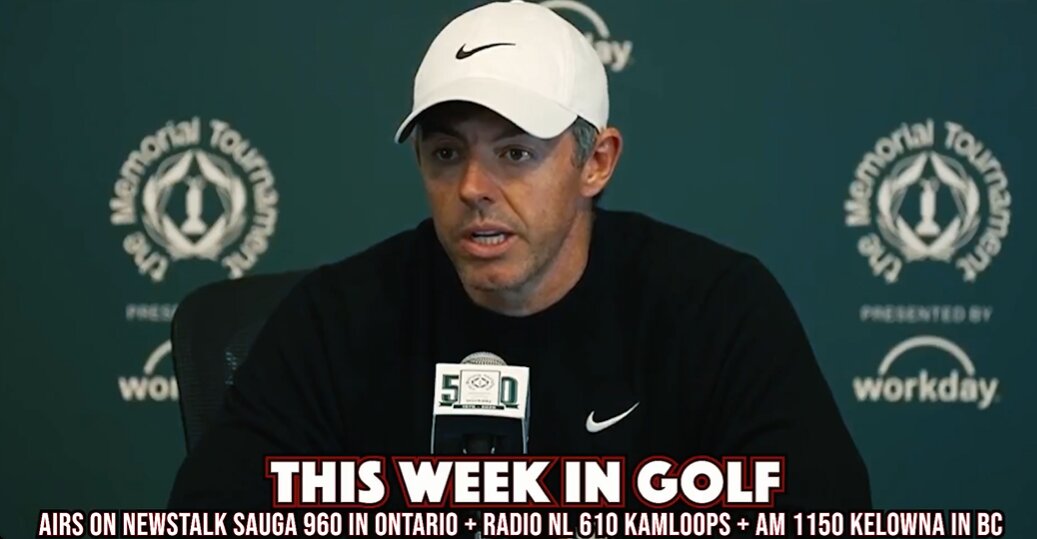
Following a Monday scouting trip to the property, Rory McIlroy entered the conversation with a perspective that balances deep reverence with a quiet, unmistakable challenge to the tournament organizers. While others have looked at the layout with a sense of impending doom, the four-time major champion sees an opportunity for greatness, provided the governing bodies exercise restraint.
“If it is set up the right way,” McIlroy remarked after his practice round, “I think it is one of the best championship tests in the country. It is an amazing golf course.”
The comment carries immense weight, arriving at a time when players are hyper-aware of how easily a U.S. Open setup can slide into controversy. McIlroy’s assessment serves as both an endorsement of the architectural masterpiece and an early warning system for the United States Golf Association.
The Long Island Detour
Rather than arriving blindly into the chaotic atmosphere of a tournament week, McIlroy chose a tactical approach that has become standard for the modern elite. He used a brief window on Monday to drop his bags on the historic property, evaluating the changes firsthand before pivoting to his immediate competitive commitments at the Memorial Tournament.
This was a reconnaissance mission born out of historical necessity. Shinnecock is a venue that demands familiarity, a place where a player must understand the angles of the terrain long before the pressure of a Thursday morning tee time arrives.
For McIlroy, stepping back onto these fairways is a chance to confront past demons. His previous competitive encounter with the course was a brutal affair, characterized by an opening-round 80 that effectively ended his tournament before it truly began. Walking the property on a quiet Monday provided the clarity needed to separate the inherent genius of the design from the external factors that can distort it.
Generosity with a Violent Perimeter
The primary revelation from the early scouting reports is the surprising visual landscape off the tee boxes. In an era where major championships routinely choke down fairways to the width of walking paths, the architecture at Shinnecock currently offers a shocking amount of breathing room. McIlroy noted that the landing zones are notably more generous than they were during the infamous 2018 iteration, a design choice that should theoretically favor aggressive drivers of the golf ball.
However, this apparent hospitality is merely a psychological trap. The width is a necessity because the penalty for missing is so absolute.
According to the Northern Irishman, the first cut of rough is currently sitting at a penal five inches deep, extending only about three paces wide before transitioning immediately into the terrifying, unplayable native fescue. The structural design creates a definitive contract between the architect and the competitor.
The fairways are very generous, meaning there is very little excuse for failing to find the short grass. If a player misses the target by even a single yard, they have entirely abandoned their right to a clean lie. It is a philosophy that rewards elite precision while completely eliminating the possibility of scrambling from wild tee shots.
The Ghost of Tournaments Past
When McIlroy speaks of setting the course up “the right way,” he is tapping into a deep well of historical anxiety. Shinnecock Hills has a complicated relationship with the USGA, occasionally serving as the backdrop for setups that crossed the line from difficult to entirely unplayable. The memories of dead greens in 2004, where officials were forced to water putting surfaces between groups just to keep balls stationary, still linger like a dark cloud over the organization.
Even the 2018 tournament, won by Brooks Koepka, pushed the field to the absolute brink of psychological exhaustion, rendering under-par scores an extinct species by Sunday afternoon.
The genius of the venue rests in its natural defenses: the shifting Atlantic winds, the severe turtleback green complexes, and the natural contours of the land. When tournament officials try to manufacture additional difficulty on top of those native traits, the competition risks devolving into a lottery. McIlroy’s public praise is a polite reminder that the course does not require artificial tricks to identify the best golfer in the world.
The Strategic Path Ahead
For a player of McIlroy’s specific skill set, a properly balanced Shinnecock is an intoxicating proposition. He remains arguably the most dominant total driver of the golf ball in the modern game. If the fairways remain wide enough to weaponize his distance, he can dictate the terms of engagement from the tee box, turning a defensive struggle into a showcase of physical superiority.
The true test will come on the approach shots. Because the green complexes are so extraordinarily intricate, finding the proper section of the fairway is paramount to controlling spin and trajectory. Golfers who find themselves hacking out of that five-inch rough will have no ability to control their ball into the putting surfaces, leading to an inevitable cascade of bogeys and double-bogeys.
As the countdown to the opening round begins, the ideological battle lines have been drawn. The players want a fair fight that honors execution; the fans want a spectacle that tests human endurance. By declaring the venue one of the greatest tests in the nation, McIlroy has placed the responsibility squarely on the shoulders of the setup crew. The canvas is perfect. Now, the golfing world waits to see what kind of picture the regulators choose to paint.

