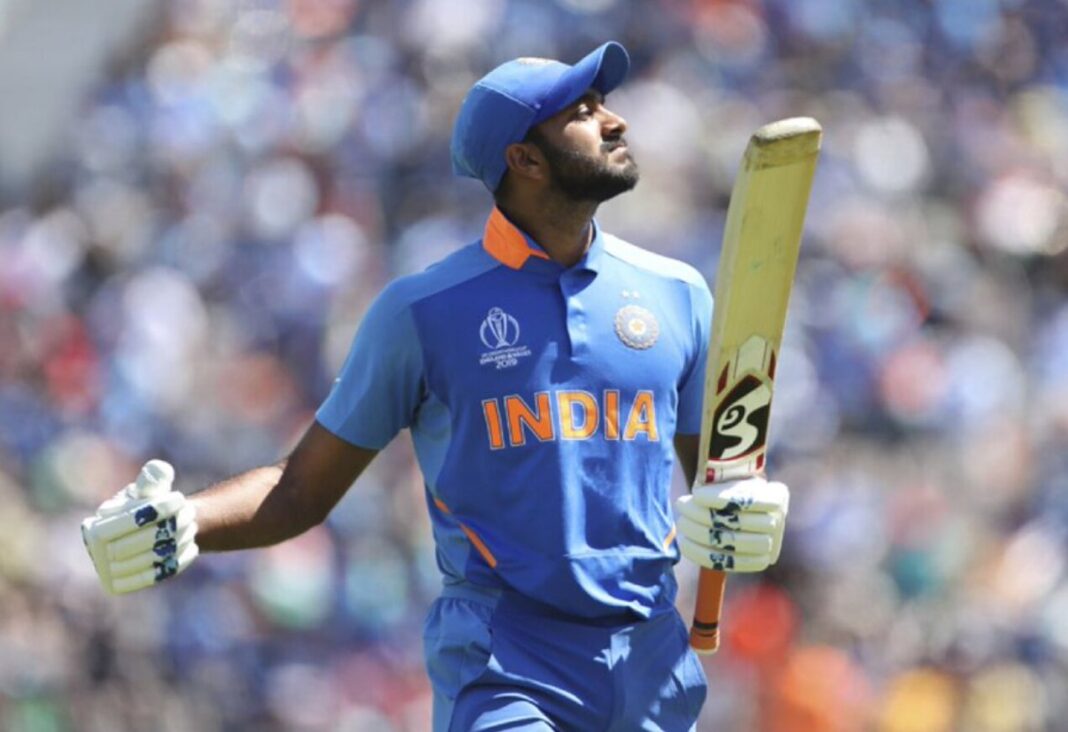
Vijay Shankar’s career was never easy to define in one clean sentence. That was both his gift and, at times, the burden he carried.
He was a batter who could bowl. A bowler who could rescue overs. A fielder trusted in key positions. A player who spent much of his career being judged through the lens of versatility, balance, and expectations that often grew louder than the cricket itself.
Now, the Tamil Nadu all-rounder has officially stepped away from domestic cricket and the IPL, closing a long and layered chapter in Indian cricket while leaving the door open for a new phase in overseas leagues.
Shankar announced his decision through a social media post, thanking the BCCI, the Indian team, his IPL franchises, and the domestic sides that shaped his journey. Sunrisers Hyderabad and Gujarat Titans were among the IPL teams he acknowledged, while Tamil Nadu and Tripura formed the emotional backbone of his domestic story.
For a player who became widely known through the famous “3D” tag, his retirement is more than just the end of a playing career in India. It is a reminder of how difficult it can be to survive in Indian cricket when talent, timing, selection debates, injuries, and public perception all collide.
A Career Built on Balance
Vijay Shankar was not the kind of cricketer who always demanded attention with explosive numbers. His value often lived in balance.
He could walk into a side and offer batting depth. He could provide medium-pace overs when the team needed control. He could field with energy and commitment. In a cricket system constantly searching for all-round options, that made him valuable.
But it also made him vulnerable to comparison.
When a player is selected as a specialist batter, the job is clear. When a player is picked as a bowler, the expectation is direct. For all-rounders, especially in India, the judgement is often harsher. They are expected to contribute in every department, every time, and still justify their place in a team full of specialists.
Shankar lived through that pressure.
He was asked to be flexible, and he embraced that role. Sometimes it worked beautifully. Sometimes injuries interrupted his rhythm. Sometimes the debate around his place became louder than his performances.
Yet through it all, he remained a cricketer built on effort rather than noise.
The World Cup Moment Against Pakistan
Among the memories Shankar reflected on, one stands above many others: his first World Cup wicket against Pakistan.
For any Indian cricketer, an India-Pakistan match carries a different emotional weight. The atmosphere is sharper. The spotlight is heavier. Every small moment becomes magnified. To take a wicket in that setting, on that stage, is the kind of memory that stays with a player forever.
For Shankar, it became a defining highlight.
It was not just about the wicket itself. It was about belonging to that moment. A World Cup match against Pakistan is not simply another fixture on the calendar. It is a pressure chamber. Players are remembered for how they respond when the tension is at its highest.
That wicket gave Shankar a place in one of cricket’s most intense rivalries.
Even if his international career did not become as long or as decorated as some expected, that moment remains part of his story. It showed why selectors had valued his all-round skill set, and why his presence in a squad offered tactical options.
Tamil Nadu Leadership and Domestic Pride
Beyond the India shirt and IPL spotlight, Shankar’s domestic career with Tamil Nadu deserves its own respect.
Captaining Tamil Nadu to trophies became one of the proudest parts of his journey. Domestic cricket rarely gets the glamour of international matches, but it is where reputations are built slowly, through long seasons, difficult pitches, and dressing-room responsibility.
Leadership in domestic cricket demands a different kind of toughness.
A captain has to manage experienced players, young talent, changing conditions, and the grind of Indian cricket’s crowded calendar. Shankar’s success with Tamil Nadu showed a side of him that casual fans may not always have seen. He was not just a utility player. He was a senior figure capable of leading, organizing, and contributing to a winning culture.
That part of his career matters because it reflects consistency and respect within the system.
Not every player becomes a long-term India regular. Not every player becomes a national superstar. But those who shape domestic teams, win trophies, and guide younger players leave a real impact on Indian cricket.
Shankar did that.
IPL Chapters With SRH and Gujarat Titans
The IPL brought Shankar both visibility and scrutiny.
His time with Sunrisers Hyderabad and Gujarat Titans placed him in high-pressure environments where every performance was dissected instantly. In franchise cricket, players rarely get the luxury of slow narratives. One good innings can revive conversation. One poor season can shift perception quickly.
At Gujarat Titans, the bond clearly remained strong. After his retirement announcement, the franchise celebrated him as a “forever Titan,” a line that reflected both affection and respect.
That tribute matters.
In franchise cricket, players move often and loyalties can feel temporary. But when a team publicly remembers a player with warmth, it says something about what he brought beyond match-day numbers. Dressing-room presence, professionalism, adaptability, and commitment all matter inside successful teams.
Shankar was never just a name on a squad sheet. He was a player coaches could use in different situations, someone who understood roles and accepted responsibility.
The ‘3D’ Journey and Public Perception
No reflection on Vijay Shankar’s career can ignore the “3D” label.
It followed him everywhere.
At first, it represented his all-round value: batting, bowling, and fielding. Over time, it became a meme, a joke, a debate, and sometimes an unfair shadow. Fans used it in every possible way, especially whenever selection conversations returned.
That is the strange reality of modern cricket.
A phrase can define a player more strongly than years of hard work. Social media can turn a tactical explanation into a permanent tag. Shankar became part of that culture, sometimes celebrated, sometimes mocked, often discussed.
Yet there is also something admirable in how he carried it.
He did not let the noise fully swallow his career. He kept playing, kept returning, kept finding roles across formats and teams. Fans now remembering his “3D” journey through memes are not only laughing at the past. In many ways, they are acknowledging how unforgettable his path became.
Not every cricketer becomes a superstar.
Some become characters in the larger story of the game. Shankar became one of those players people remembered, debated, and emotionally reacted to.
A New Chapter Overseas
By retiring from domestic cricket and the IPL, Shankar now opens the door to overseas leagues such as the Big Bash League or Pakistan Super League.
That move makes sense.
At this stage of his career, overseas franchise cricket offers freedom, fresh conditions, and a chance to extend his playing days without the same pressure attached to India selection or IPL competition. His all-round ability could still attract teams looking for balance, experience, and flexibility.
For Shankar, this is not necessarily the end of cricket.
It is the end of one chapter and the start of another.
He leaves Indian domestic cricket with memories across levels: World Cup pressure, IPL battles, Tamil Nadu leadership, and the strange fame of a label that followed him for years. His career had criticism, setbacks, and uneven patches, but it also had grit.
And that is why fans responded with warmth.
Vijay Shankar’s journey was not perfect. Few careers are. But it was real, hard-earned, and uniquely his own.
From Tamil Nadu trophies to a World Cup wicket against Pakistan, from IPL dressing rooms to the “3D” jokes that became part of cricket culture, he leaves behind a story that Indian fans will not forget quickly.
Now, as he looks toward overseas leagues, the all-rounder gets one more chance to do what he has always done: adapt, compete, and keep finding a role.

