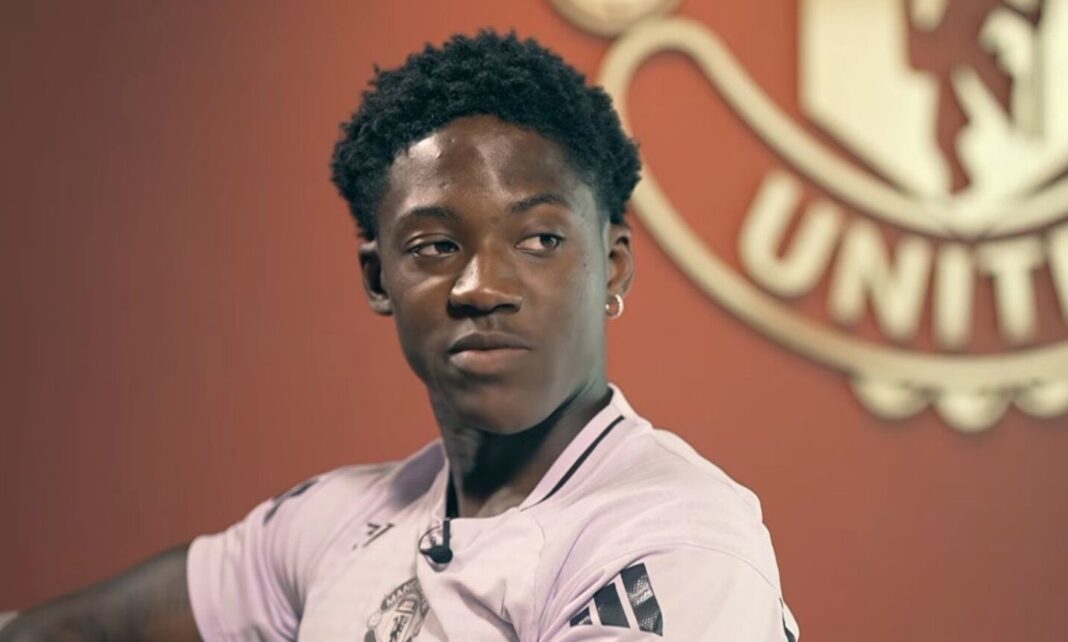
Kobbie Mainoo has delivered one of his most honest reflections yet on life under former Manchester United manager Ruben Amorim, admitting he felt pushed to the sidelines because he simply did not fit the coach’s tactical vision.
The young midfielder’s comments offered a raw glimpse into the emotional frustration he experienced during one of the most difficult periods of his emerging career.
“Yeah, when there’s new managers, they have their way that they want to play and if they think you don’t fit that, then you don’t fit that,” Mainoo said.
The statement felt strikingly mature for a player still early in his professional journey. There was no bitterness or public attack. Instead, it sounded like a footballer trying to process a difficult reality many young players eventually encounter at elite clubs.
Sometimes talent alone is not enough.
Sometimes systems decide everything.
Mainoo Went From Rising Star to Watching From the Bench
Only months earlier, Mainoo had looked untouchable inside Manchester United’s long-term plans.
Supporters viewed him as one of the brightest academy graduates in years, a midfielder capable of shaping the club’s future with his calmness under pressure, tactical intelligence, and technical control. His emergence brought optimism during a chaotic period at Old Trafford.
Then Amorim arrived.
The tactical shift under the Portuguese coach reportedly changed Mainoo’s role dramatically, and eventually his opportunities almost disappeared entirely. The midfielder admitted the hardest moments came when he was not even being introduced as a substitute.
“It’s difficult when you don’t even come on as a sub of course,” he admitted.
That line revealed the emotional weight behind the situation.
Young players can usually accept tactical adjustments or rotation decisions if they still feel involved. Being left completely outside match influence creates a far more isolating experience, especially at a club where pressure and scrutiny never disappear.
Family Became His Emotional Support System
One of the most revealing parts of Mainoo’s comments centered around how he survived the difficult spell mentally.
Rather than losing belief completely, the midfielder leaned heavily on family and close friends during moments where frustration could easily have overwhelmed him.
“But I’d say my family and my friends helped me see the light at the end of the tunnel,” Mainoo explained. “They knew it would swing back my way at some point, so I just had to be patient.”
That patience now looks crucial.
In modern football, young players often react quickly when opportunities disappear. Transfer speculation grows immediately, agents become involved, and emotional frustration can damage development pathways rapidly.
Mainoo instead stayed composed.
And eventually, the situation changed.
Michael Carrick Revived His Confidence
The turning point came when Michael Carrick replaced Amorim.
Under Carrick, Mainoo’s confidence and involvement returned almost immediately. The former United midfielder’s tactical understanding and calm communication style appear to have reconnected the young player with the freedom that originally made him so exciting.
The improvement became visible quickly.
Mainoo started looking more confident receiving possession under pressure again. His decision-making sharpened. His movement became more natural. Most importantly, he appeared emotionally lighter on the pitch.
Carrick’s arrival did not merely improve results for Manchester United overall.
For Mainoo personally, it may have rescued a crucial stage of his development.
Amorim’s System Continues to Raise Questions
The interview also indirectly highlights one of the biggest criticisms surrounding Amorim’s troubled spell at Old Trafford.
Several players reportedly struggled adapting to his tactical demands, and Mainoo’s comments strengthen the perception that the manager’s system occasionally prioritized structure over maximizing individual strengths.
That does not necessarily mean Amorim was wrong tactically.
Managers at elite clubs often make difficult decisions based on specific football philosophies. But at Manchester United, where expectations and pressure are relentless, losing the confidence of emerging talents can quickly become damaging.
Mainoo’s honesty now adds another layer to understanding why the dressing room atmosphere reportedly deteriorated during that period.
Mainoo’s Maturity Could Define His Future
Perhaps the most impressive aspect of the interview was Mainoo’s maturity throughout the discussion.
There was no public resentment. No emotional blame. No attempt to create headlines through controversy.
Instead, he acknowledged the harsh realities of elite football while emphasizing patience, work ethic, and emotional resilience.
That mentality may ultimately become one of his biggest strengths moving forward.
Because careers at clubs like Manchester United are rarely smooth. Almost every elite player experiences moments of doubt, rejection, or tactical mismatch at some stage. The players who survive long-term are often the ones capable of enduring difficult periods without losing focus entirely.
Mainoo appears to possess exactly that quality.
Old Trafford Feeling Different Again
Now, the atmosphere around Manchester United has shifted dramatically.
Carrick’s arrival stabilized the dressing room, Champions League qualification has restored optimism, and younger players once again seem central to the club’s future vision.
For Mainoo, the difference feels personal.
Only months ago, he was questioning where he stood.
Now, he looks like one of the players supporters most believe can shape the next era at Old Trafford.
And after surviving one of the toughest periods of his young career, Kobbie Mainoo’s patience may have ended up strengthening him more than anyone initially realized.

