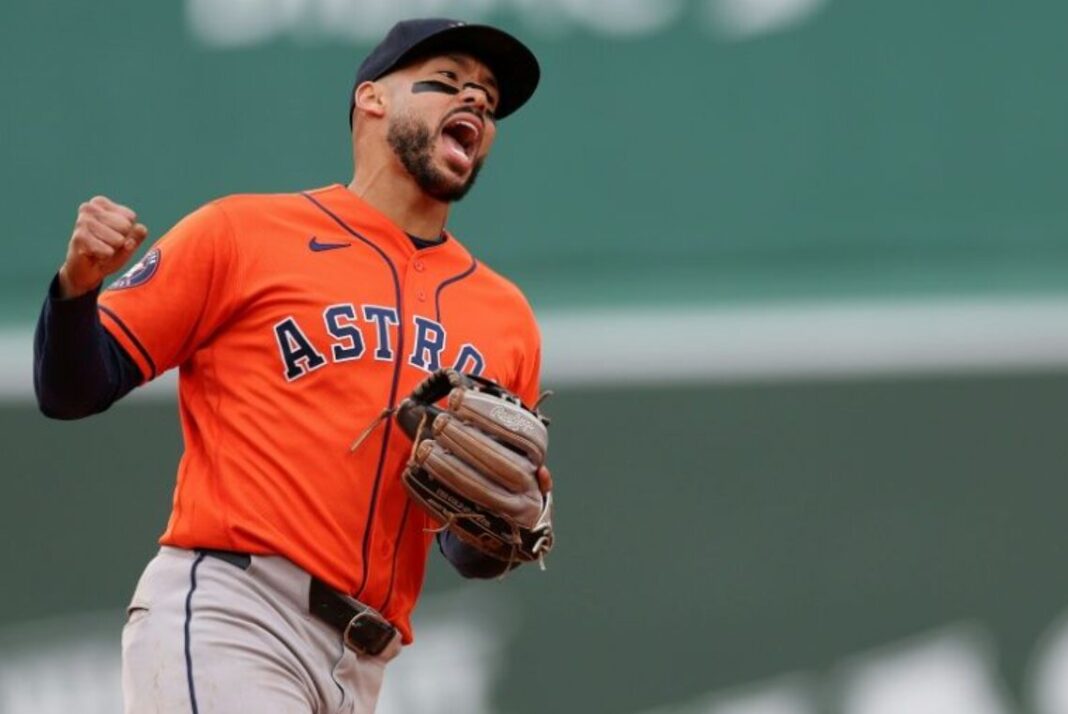
For Carlos Correa, the cruelest part of baseball’s injury cycle may be the timing.
Just when the veteran shortstop appeared to be stabilizing his season and rediscovering rhythm, another devastating setback has arrived. Correa now requires surgery on his left ankle tendon and will miss the remainder of the year, delivering a major blow to both the player and the Minnesota Twins.
But almost immediately after the announcement, the baseball world circled back to a storyline that has followed Correa for years.
Not this ankle.
The other one.
The irony surrounding the situation is impossible to ignore. It was medical concern surrounding Correa’s right ankle that famously caused both the San Francisco Giants and New York Mets to walk away from massive long-term agreements worth a combined $665 million during one of the most dramatic free agency sagas in recent baseball history.
Now, a completely different ankle has sidelined him again.
A Career Shadowed by Medical Questions
Correa’s talent has never been the issue.
At his peak, he remains one of the most complete infielders in baseball, capable of changing games with elite defense, postseason composure, and middle-of-the-order production. Few shortstops of his generation combine instincts, arm strength, and offensive impact as naturally as he does.
Yet injuries have become an unavoidable part of the conversation surrounding his career.
The controversy that stunned Major League Baseball during the 2022-23 offseason centered on concerns over Correa’s right ankle, specifically long-term durability questions tied to a previous injury. The Giants initially agreed to a blockbuster deal before concerns emerged during the physical process. The Mets then moved quickly to land him, only for similar medical fears to complicate negotiations again.
What followed became one of the strangest free-agency sequences baseball has seen in years.
Correa ultimately returned to Minnesota on a revised contract structure, with the Twins accepting a level of risk other organizations hesitated to take.
At the time, many around the league debated whether those fears had been overstated.
Now, even though this latest injury involves the left ankle rather than the right, the renewed attention feels inevitable.
A Brutal Blow for Minnesota
For the Twins, the loss extends beyond statistics.
Correa’s value to Minnesota has always reached deeper than home runs or batting averages. Inside the clubhouse, he has served as one of the franchise’s emotional leaders, bringing playoff experience and calm leadership to a roster that has often relied heavily on younger contributors.
When healthy, he stabilizes everything.
Defensively, he remains one of the game’s smartest shortstops, constantly positioning teammates and controlling the pace of the infield. Offensively, his ability to deliver in pressure situations makes him uniquely important during tight divisional races.
That presence now disappears for the rest of the season.
And for a Twins team fighting to remain competitive in a crowded American League picture, replacing that influence will not be easy.
The timing makes the situation even harsher. Midseason injuries force teams into reactive decisions rather than carefully planned adjustments. Minnesota must now figure out whether internal depth can survive the loss or whether external reinforcements become necessary before momentum slips away.
The Mental Toll Cannot Be Ignored
Physical recovery is only part of the challenge for elite athletes enduring repeated injuries.
For Correa, there is also the psychological burden of constantly hearing durability debates attached to his name. Every setback inevitably reopens discussions about long-term health, contract value, and organizational risk.
That can wear on even the strongest competitors.
Players often speak about how difficult it becomes when public conversation shifts away from performance and toward body parts, medical charts, and future projections. In Correa’s case, those discussions have followed him relentlessly since the failed mega-deals with San Francisco and New York.
This latest injury, despite involving a different ankle entirely, will almost certainly reignite those narratives across baseball circles.
Fair or unfair, that reality now becomes part of the story again.
Giants and Mets Decisions Revisited
Whenever Correa’s health becomes news, the Giants and Mets inevitably re-enter the conversation.
At the time those deals collapsed, reactions across baseball were sharply divided. Some viewed the organizations as overly cautious about a superstar talent entering his prime years. Others believed the franchises were simply protecting themselves from long-term medical uncertainty.
Both perspectives still exist today.
What makes the debate fascinating is that Correa has continued showing flashes of elite-level baseball whenever available. The skill has never disappeared. The concern has always centered around sustainability over the length of massive contracts.
This latest development will likely strengthen arguments from executives who prioritize long-term medical projections aggressively during negotiations.
But it also reinforces how fragile baseball careers can be regardless of prediction models. The injury ending Correa’s season is not even the ankle that triggered the original controversy.
Sometimes the human body simply refuses to follow neat narratives.
What Comes Next
The immediate focus now shifts toward surgery and recovery timelines.
For Correa, the priority becomes returning fully healthy rather than rushing toward short-term timelines. At 31, preserving mobility and long-term stability matters far more than attempting an accelerated comeback during a lost season.
The Twins, meanwhile, must regroup quickly.
Losing a player of Correa’s caliber changes both the emotional and tactical structure of a roster. Leadership responsibilities shift. Defensive chemistry changes. Offensive pressure increases elsewhere in the lineup.
Those ripple effects often define seasons more than the injury announcement itself.
As for Correa, his career story remains remarkably complex. He is still viewed as one of baseball’s premier talents. He is still capable of postseason brilliance. He is still respected across the league as a winner and competitor.
But once again, health has interrupted the conversation.
And once again, questions surrounding ankles, contracts, and long-term durability have returned to follow him.

