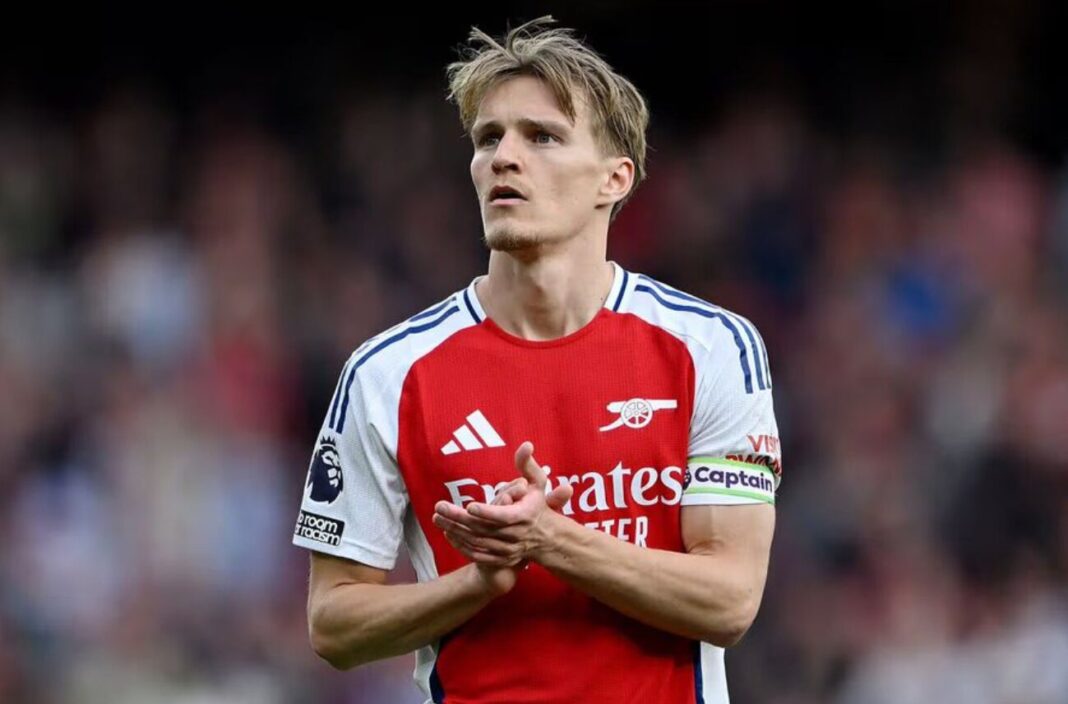
Madrid/London: Diego Simeone made a bold and calculated decision by rotating his entire starting lineup as Atlético Madrid prepared for their crucial UEFA Champions League semi-final second leg against Arsenal FC.
In a move that underlines Atlético’s priorities, Simeone made 11 changes to the starting XI, resting key players including Jan Oblak, Antoine Griezmann, Koke, and Ademola Lookman.
A Strategic Sacrifice for a Bigger Goal
With Atlético Madrid sitting comfortably in fourth place in La Liga and facing minimal pressure domestically, Simeone’s decision reflects a clear focus—maximize performance in Europe.
The Champions League semi-final second leg at the Emirates is not just another match; it represents an opportunity to move one step closer to a historic title that has narrowly eluded the club in the past.
By resting his core players, Simeone ensures:
- Peak physical condition for key stars
- Reduced injury risk before a high-intensity fixture
- Tactical freshness for the decisive game
This is a classic Simeone move—prioritizing long-term impact over short-term optics.
Youth-Focused Lineup Signals Trust in Academy
Atlético Madrid took the field in a youthful 4-3-3 formation, featuring backup goalkeeper Mateo Musso wearing the captain’s armband—a symbolic and strategic choice.
Even more notably, Simeone included four academy players, offering a rare opportunity for young talents to prove themselves at the top level.
Among the names generating excitement were:
- Rayane
- Rodrigo Mendoza
For Atlético fans, this wasn’t just squad rotation—it was a glimpse into the club’s future.
Fan Reactions: Optimism vs Criticism
The decision sparked mixed reactions across football circles.
- Atlético supporters largely welcomed the move, seeing it as a smart strategy and an exciting chance to watch emerging talents.
- Arsenal fans, however, interpreted the heavy rotation differently, suggesting it could signal nervousness ahead of the tightly contested semi-final tie.
This contrast highlights the psychological dimension of elite football, where even tactical decisions become part of the mind games between clubs.
Why Rotation Could Be a Game-Changer
In modern football, especially at the highest level, squad management is as important as tactics.
By rotating heavily, Atlético Madrid gain several advantages:
- Energy Edge: Fresh players in the second leg could make a decisive difference.
- Tactical Flexibility: Rested stars allow Simeone to deploy his strongest possible lineup.
- Mental Reset: Avoiding fatigue helps maintain focus in high-pressure moments.
Given the intensity of Champions League semi-finals, even a slight physical advantage can determine the outcome.
Risk Factor: Lack of Match Rhythm
However, such heavy rotation is not without risks.
- Key players may lose match rhythm
- The backup lineup may lack cohesion
- Momentum from previous games could be disrupted
Simeone is effectively betting that freshness outweighs continuity—a decision that will ultimately be judged by the result at the Emirates.
All Eyes on the Emirates Showdown
The upcoming clash between Atlético Madrid and Arsenal is finely balanced, with both teams aiming to secure a place in the Champions League final.
For Atlético, the strategy is clear:
- Arrive with maximum energy
- Execute a disciplined tactical plan
- Capitalize on key moments
For Arsenal, the narrative is equally compelling—they will look to exploit any disruption caused by Atlético’s rotation.
Conclusion
Diego Simeone’s decision to rotate his entire lineup is a bold statement of intent. It reflects a team fully committed to European success, willing to take calculated risks in pursuit of a bigger goal.
Whether this strategy proves to be genius or gamble will be decided on Tuesday night at the Emirates.
One thing is certain—Atlético Madrid are all-in on the Champions League.
More Updates: Football

