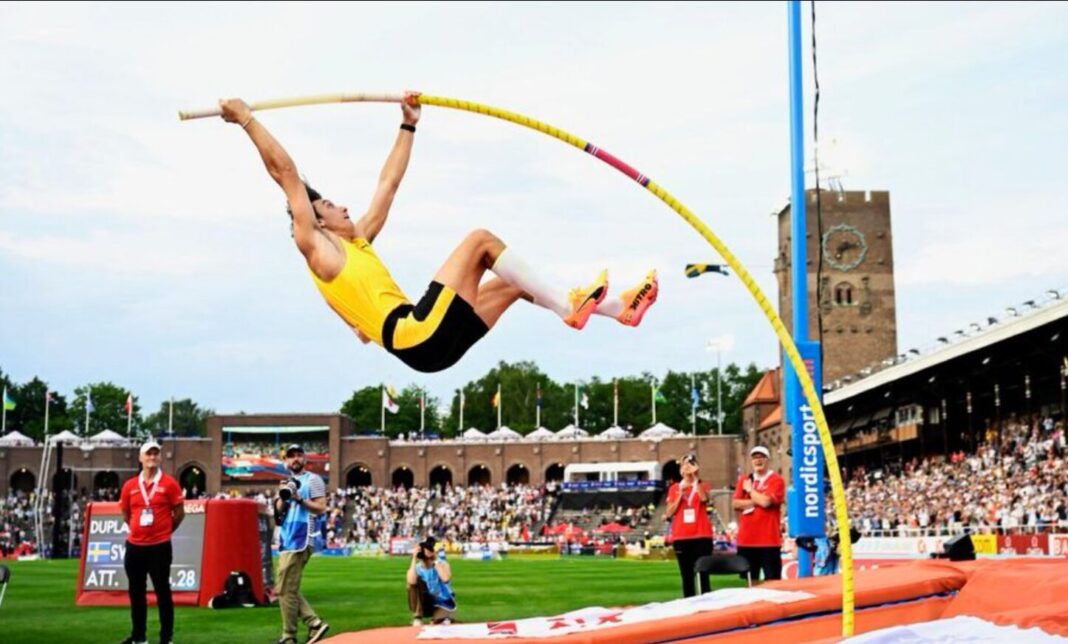
When Armand Duplantis breaks world records now, the reaction almost feels routine.
That is the level the Swedish superstar has created for himself.
But even after dominating pole vaulting for years and repeatedly rewriting the limits of the sport, Duplantis is still searching for more. Still experimenting. Still trying to find extra centimeters where most athletes would already be satisfied with greatness.
His latest adjustment could become one of the most fascinating developments in athletics this season.
Ahead of another packed championship calendar, the world record holder has revealed he is adopting a longer 22-step run-up in an attempt to generate greater speed and power before takeoff, a technical shift that could significantly alter both his rhythm and explosive potential on the runway.
For most athletes, making such a major change at the peak of dominance would feel unnecessarily risky.
For Duplantis, it reflects relentless ambition.
Why the Longer Run-Up Matters
In pole vaulting, the approach run is everything.
The speed generated before planting the pole directly influences how much energy transfers upward during the vault itself. More speed often creates greater lift potential, but it also introduces greater complexity. Timing becomes more delicate, rhythm harder to control, and technical precision even more demanding.
That is why Duplantis’ decision is so intriguing.
By extending to a 22-step approach, he is effectively attempting to create additional acceleration before takeoff, hoping the extra momentum can help unlock even higher clearances during major competitions.
The concept sounds simple in theory.
In practice, it is incredibly difficult.
Pole vaulting already demands near-perfect synchronization between sprint mechanics, pole planting, body control, and aerial positioning. Even slight disruptions in rhythm can destroy an entire jump sequence.
Yet Duplantis appears convinced the adjustment could elevate his performances further.
Which is a frightening thought for the rest of the world.
The Relentless Pursuit of Perfection
What separates Duplantis from many dominant athletes is that he never competes like someone satisfied with existing achievements.
He already owns the world record. He already possesses Olympic gold, world titles, and widespread recognition as one of athletics’ biggest stars. Yet his mindset still resembles an athlete chasing his breakthrough rather than protecting legacy.
That mentality explains the willingness to experiment.
Many champions become conservative after reaching the top, avoiding unnecessary changes that could disrupt consistency. Duplantis operates differently. He appears obsessed with exploring the absolute ceiling of human performance in his event.
And perhaps that is why he keeps pushing the sport forward.
Bigger Goals Still Ahead
The timing of the adjustment also matters enormously.
With major championships approaching, including another intense international athletics season, Duplantis is clearly thinking beyond simply winning competitions. He is searching for performance gains that could help him dominate even more convincingly when pressure rises on the biggest stages.
Because for athletes operating at his level, victory alone often stops being the primary motivation.
Records become the target.
Legacy becomes the target.
Pushing beyond what previously seemed possible becomes the target.
A longer run-up could potentially provide the extra speed needed for Duplantis to continue extending his own world record, something he has already turned into a recurring spectacle over recent years.
Risk and Reward in Technical Adjustments
Of course, the move carries risk as well.
Longer approaches can increase inconsistency if timing between sprinting and pole plant becomes unstable. Pole vaulting margins are incredibly small, and additional speed sometimes creates more technical chaos rather than improved efficiency.
Even elite vaulters occasionally struggle when altering approach mechanics after years of muscle memory built around previous rhythms.
That is what makes Duplantis’ confidence so notable.
The Swedish star clearly believes his athleticism, coordination, and technical foundation are strong enough to absorb the adjustment without sacrificing consistency.
Historically, betting against him has rarely worked out well.
Athletics Continues to Witness Something Special
Perhaps the most remarkable part of the entire situation is how normal discussions like this have become around Duplantis.
Athletics is no longer asking whether he can win gold medals.
The conversation has shifted toward how much further he can stretch the limits of the event itself.
Every season now feels like another chapter in an evolving experiment between athletic genius and physical possibility. Fans no longer watch simply to see if Duplantis wins. They watch wondering whether they might witness history again.
This latest technical evolution only adds more intrigue to that storyline.
A Champion Still Evolving
The greatest athletes often share one trait above everything else:
They never stop evolving.
Duplantis’ decision to adopt a longer 22-step run-up perfectly captures that mentality. Even after conquering the sport repeatedly, he continues searching for ways to improve rather than protect what he has already achieved.
That hunger may ultimately define his legacy more than the records themselves.
Because while the world already views him as the greatest pole vaulter of his generation, Duplantis still seems to view himself as a work in progress.
And if this new approach unlocks even greater power during takeoff, the rest of athletics may soon witness the world record moving even higher once again.

