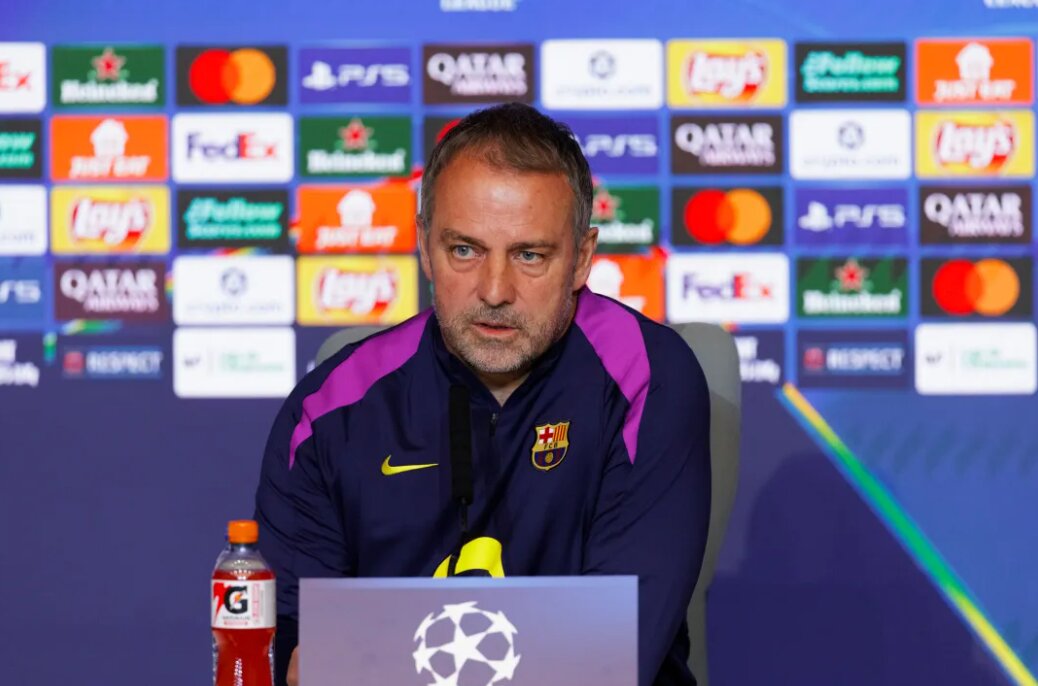
Tensions ahead of a high-profile Champions League encounter between Atletico Madrid and Barcelona have taken an unexpected turn, with pre-match focus shifting from tactics to turf conditions. Barcelona manager Hansi Flick raised concerns over the state of the pitch during his team’s training session in the Spanish capital, prompting an official response from UEFA.
The German coach was observed in detailed discussions with UEFA delegates on Monday evening after Barcelona trained at Atletico’s home ground. Reports suggest Flick’s dissatisfaction centered on the grass length and overall surface condition, factors that can significantly influence the pace and fluidity of play, particularly for a possession-oriented side like Barcelona.
Such concerns are not uncommon in elite European competition, where marginal gains often play a decisive role. For teams that rely heavily on quick passing, movement, and technical precision, even slight variations in pitch conditions can disrupt rhythm and execution. Flick, known for his meticulous preparation, appeared keen to ensure that conditions would not disadvantage his side in a crucial knockout fixture.
In response, UEFA acted swiftly to address the issue, reiterating its regulations to both clubs. According to multiple reports, the governing body confirmed that the grass must be maintained at a height of 26 millimeters, well within the permitted maximum of 30 millimeters. Additionally, instructions were issued to ensure the pitch is adequately watered both before kick-off and during half-time, measures aimed at preserving a consistent and high-quality playing surface.
These guidelines are part of UEFA’s broader commitment to maintaining uniform standards across all Champions League venues. By enforcing such regulations, the organization seeks to eliminate variables that could unfairly influence the outcome of matches, ensuring that games are decided by skill and strategy rather than external conditions.
For Atletico Madrid, known for their disciplined and often physically intense style under Diego Simeone, pitch conditions have occasionally been viewed as a subtle tactical element. A slightly longer or less watered surface can slow down play, potentially disrupting opponents who favor a faster tempo. However, with UEFA’s intervention, any such advantages are expected to be neutralized.
Barcelona, on the other hand, will be eager to impose their trademark style, relying on crisp passing and positional control. Flick’s attention to detail reflects the importance of ensuring optimal conditions for his team to execute their game plan effectively.
While the spotlight will ultimately return to the players once the match begins, this pre-match episode highlights the fine margins that define elite football. In a competition as prestigious as the Champions League, even the condition of the grass can become a talking point, underscoring the intensity and scrutiny surrounding every aspect of the game.
As both sides prepare to take the field, the focus will shift back to football itself. Yet, the brief controversy serves as a reminder that at the highest level, nothing is overlooked, and every detail, no matter how small, can carry significance.

