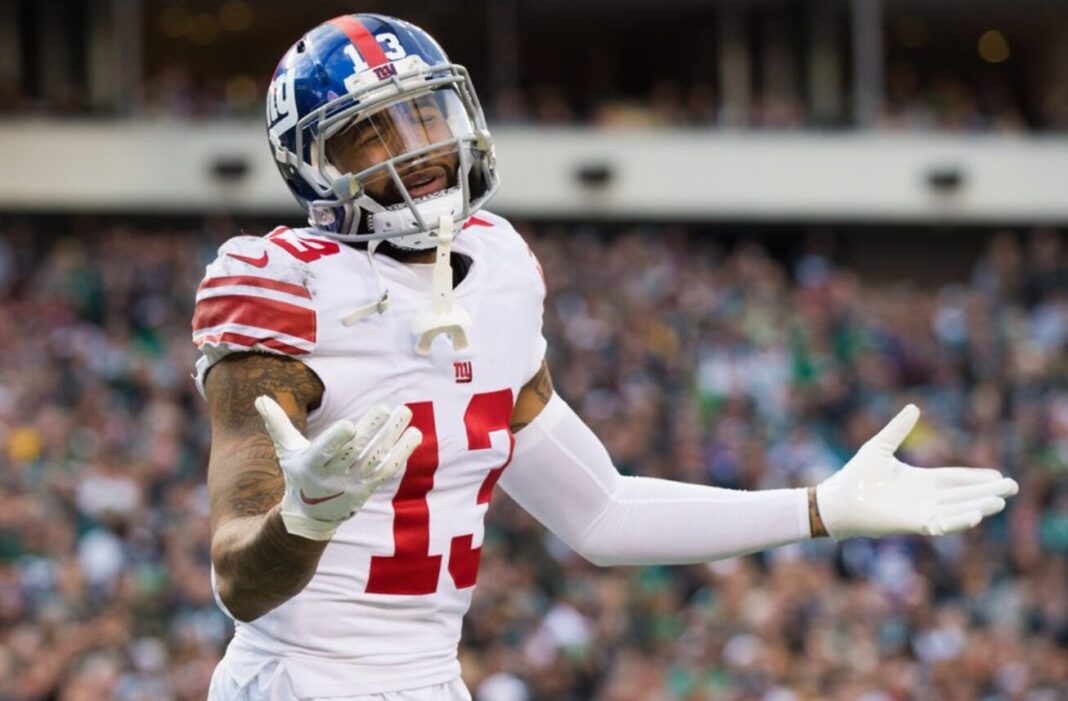
For much of the past few seasons, the wide receiver position has been one of the biggest talking points surrounding the New York Giants. Whether it was a lack of a true No. 1 target, inconsistent production, or injuries disrupting continuity, the group often felt incomplete compared to the NFL’s elite receiving units.
That perception may still exist heading into the 2026 season, but a closer look at the roster suggests the Giants have quietly assembled a receiver room that is far more functional and versatile than many national analysts are giving credit for.
No, this isn’t the league’s most talented group. It doesn’t feature multiple All-Pro receivers or the star power of some of the NFL’s offensive juggernauts. What it does offer, however, is a collection of players with clearly defined skill sets that complement one another in ways that could make life significantly easier for the Giants’ offense.
At the center of everything is Malik Nabers, who has already established himself as the unquestioned focal point of the passing game. Defenses know the ball is coming his way, yet stopping him remains a completely different challenge. His ability to win at all levels of the field gives the Giants something they haven’t consistently had in years: a receiver who can dictate defensive game plans before the opening snap.
The offense runs through Nabers, and that’s exactly how it should be.
What makes this group more intriguing, though, is what surrounds him.
The addition of Darnell Mooney could end up being one of the more underrated moves of the offseason. While he may not generate headlines like some of the league’s bigger names, Mooney remains one of the better vertical separators in football when healthy. His speed forces safeties to respect the deep ball, creating additional space underneath for Nabers and the rest of the offense. More importantly, he brings legitimate WR2 value rather than simply serving as another rotational option.
That matters because modern NFL passing attacks require more than one threat.
Defenses are too sophisticated to allow a single star receiver to carry an offense over the course of a full season. Mooney’s presence should prevent opponents from dedicating excessive resources toward stopping Nabers, something the Giants desperately needed.
Then there is Darius Slayton, a player whose career with the Giants has often been a source of frustration and optimism at the same time.
The talent is obvious. Few receivers consistently get behind defenses as effectively as Slayton. Every season he produces multiple explosive plays that remind everyone why coaches continue trusting him. The issue has never been separation. The issue has been finishing the play.
If Slayton can simply improve his consistency catching the football, his value within this offense increases dramatically. Deep threats remain one of the NFL’s most important complementary pieces, and Slayton continues to be one of the better players in that role. The opportunities are there. The production must follow.
Perhaps the most fascinating player in the room is Jalin Hyatt.
Entering his third season, Hyatt feels like a player approaching a career crossroads. The speed that made him such an exciting prospect remains undeniable, but flashes alone are no longer enough. The Giants need tangible development. They need route refinement. They need a receiver capable of turning raw athleticism into reliable production.
This season feels like a defining moment.
NFL history is filled with receivers who took major leaps in Year 3 after struggling to find consistency early in their careers. Hyatt doesn’t necessarily need to become a star, but he does need to prove he can be more than a situational deep threat. If that jump arrives, the entire dynamic of this receiving corps changes.
Meanwhile, Calvin Austin III adds an element of quickness and creativity that every offense values. Whether working from the slot, motioning across formations, or contributing on gadget concepts, Austin gives offensive coordinators flexibility. His role may not generate massive statistics, but players with his skill set often become important pieces in sustaining drives and creating mismatches against linebackers and nickel defenders.
The rookie generating significant intrigue is Malachi Fields.
Standing 6-foot-4, Fields brings a different dimension to the room. While many of the Giants’ receivers win through speed and separation, the rookie’s size offers potential value in contested-catch situations and red-zone packages. Young receivers often face a steep learning curve in the NFL, but Fields possesses the physical tools that coaching staffs love to develop.
If he adjusts quickly, he could become one of the surprise contributors on the roster.
Depth also matters, and that’s where players like Braxton Berrios enter the picture. Every successful NFL team needs reliable veterans capable of filling multiple roles. Berrios provides value as a return specialist while also offering dependable depth at receiver. Those contributions may not dominate headlines, but they become extremely important during the grind of a 17-game season.
Then there is the biggest wildcard of them all.
Odell Beckham Jr. remains one of the most recognizable names associated with the franchise. The question isn’t about his talent. Everyone knows what Beckham accomplished during his prime years in New York. The question is whether there is enough left physically for him to contribute meaningfully at this stage of his career.
If the answer is yes, even in a limited role, the signing could prove valuable. Beckham no longer needs to be the centerpiece of the offense. He simply needs to provide quality snaps, veteran leadership, and occasional playmaking when opportunities arise.
That is a far more realistic expectation than asking him to carry a passing attack.
When evaluating this receiver room as a whole, the biggest takeaway is balance. The Giants have a true WR1. They have vertical threats. They have speed. They have size. They have slot versatility. They have depth. Most importantly, they have players whose strengths complement one another rather than overlap entirely.
Will this group suddenly become the best receiving corps in football? Probably not.
But the idea that the Giants possess a weak or uninteresting receiver room feels increasingly outdated. There are legitimate questions about consistency, development, and health, but there is also considerably more talent than the national narrative suggests.
The success of the unit will ultimately depend on whether players like Mooney, Hyatt, and Beckham can maximize their roles alongside Nabers. If several of those pieces fall into place, the Giants could enter the season with one of the league’s more underrated offensive groups.
It may not be perfect.
But it is a lot more dangerous than people think.

