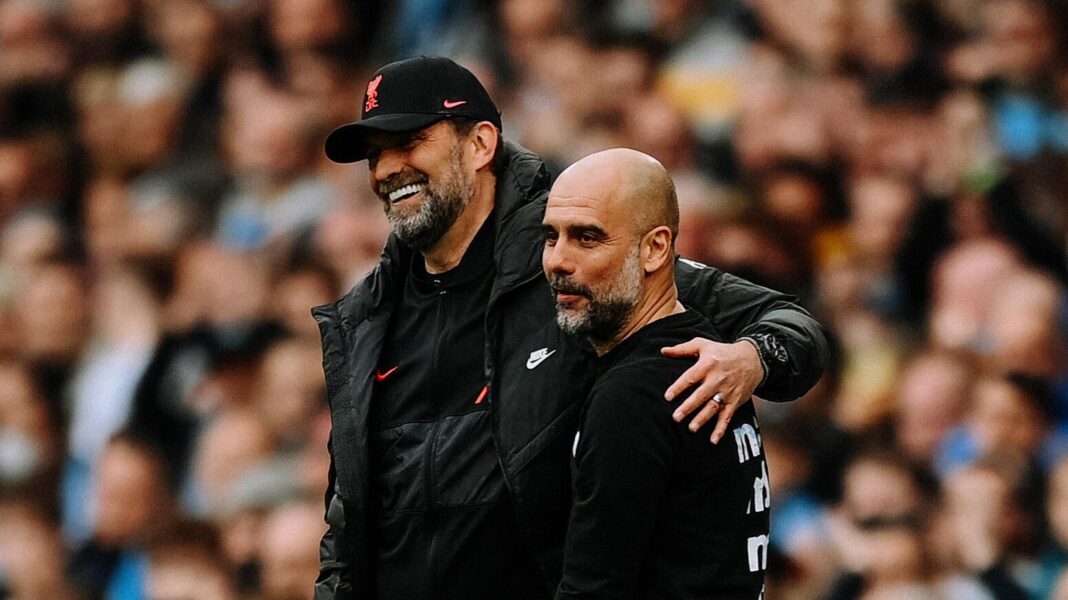
Pep Guardiola has spent the last decade turning Manchester City into the defining club of English football’s modern era. Now, the manager who changed the standards of the Premier League is preparing to walk away.
The 55-year-old has confirmed he will leave Manchester City at the end of the season, closing a historic chapter that delivered 20 major trophies, six Premier League titles, a Champions League triumph in 2023, and a level of domestic dominance that forced every rival to either evolve or fall behind.
For City supporters, this is not simply the departure of a manager. It is the end of a footballing age.
Guardiola arrived in Manchester with a reputation already built on genius. What followed was something even more demanding: proof that his football could survive the speed, physicality, and emotional chaos of England. It did more than survive. It reshaped the league.
City became a machine of control and pressure, a team that could suffocate opponents with possession, press them into mistakes, and turn matches into tactical traps. Under Guardiola, winning was not enough. Winning had to come with structure, precision, and constant reinvention.
But after ten years of chasing perfection, the energy has finally started to drain.
Guardiola Admits the Fight Has Taken Its Toll
The most striking part of Guardiola’s decision is not the timing, but the honesty behind it.
He has cited fading energy after years of relentless title races, with games arriving every three days and pressure refusing to ease. It is a feeling that echoes Jurgen Klopp’s emotional Liverpool exit, when another era-defining Premier League manager admitted that the intensity of the job had worn him down.
That comparison feels natural.
Guardiola and Klopp were rivals, but they also pushed each other into greatness. Their teams raised the league’s competitive temperature. Every dropped point felt costly. Every tactical adjustment mattered. Every season seemed to demand more points, more consistency, more mental strength.
For Guardiola, the fight became a way of life.
There were Premier League title races that required almost flawless runs. There were Champions League heartbreaks before the final breakthrough. There were domestic cups to chase, squads to refresh, injuries to manage, and the constant expectation that City should not just compete, but dominate.
That kind of pressure leaves a mark.
The modern elite manager is not only a tactician. He is a psychologist, strategist, spokesperson, crisis manager, and emotional shield for the players. Guardiola carried all of that while maintaining a standard that few clubs in football history have matched.
Eventually, even the best run out of fuel.
A Trophy Haul That Redefined Manchester City
The numbers attached to Guardiola’s City reign are staggering.
Twenty major trophies. Six Premier League titles. A Champions League crown in 2023. Add the recent FA Cup and Carabao Cup successes, and the scale of his influence becomes impossible to separate from City’s modern identity.
Before Guardiola, City were already ambitious and successful. Under him, they became a dynasty.
The Premier League titles mattered because of how they were won. City did not stumble into dominance. They constructed it through patterns, positional play, squad depth, and ruthless standards. They turned long winning runs into something almost normal. They made 90-point seasons feel like the expectation rather than the exception.
The 2023 Champions League triumph carried a different emotional weight.
For all the domestic brilliance, Europe had remained the question that followed Guardiola at City. Each elimination brought fresh criticism. Each near miss sharpened the pressure. When City finally won it, the victory did more than complete a trophy cabinet. It validated the entire project on the biggest club stage.
That night changed how this era will be remembered.
It turned greatness into completion.
Arsenal’s Title Win Signals a Changing Landscape
This season has added another layer to the farewell.
City recently lifted the FA Cup and Carabao Cup, proving that the winning habit has not disappeared. Yet Arsenal claimed the Premier League, ending City’s hold on the title and reminding everyone that English football is moving into a new phase.
That detail matters.
Guardiola is not leaving after total collapse. He is leaving with silverware still arriving, with the club still powerful, and with his reputation intact. But Arsenal’s league success shows that the chasing pack has grown stronger. The standards Guardiola created have now been absorbed by rivals who are younger, hungrier, and built in response to City’s dominance.
In a way, that may be his greatest impact.
He changed not only Manchester City, but the entire league around them. Clubs had to become more tactically detailed. Full-backs had to think differently. Midfielders had to be press-resistant. Goalkeepers had to play with their feet. Managers had to prepare for teams that could control space as much as the ball.
The Premier League became sharper because Guardiola forced it to be.
Sir Alex Ferguson Tribute Adds Emotional Weight
Among the most touching elements of Guardiola’s announcement was the tribute from Sir Alex Ferguson.
For a Manchester City manager, praise from the greatest figure in Manchester United history carries unusual power. It is respect crossing the city’s deepest football divide. Ferguson knows better than almost anyone what it means to build a dynasty, sustain hunger, manage pressure, and survive year after year in a league that never pauses.
That tribute speaks to Guardiola’s place in the game.
Rivalries matter, but greatness recognizes greatness.
Ferguson built one empire in Manchester. Guardiola built another. Different clubs, different eras, different football languages, but the same rare ability to turn success into a culture.
Enzo Maresca Eyed as Successor
The next question is obvious: who follows the man who changed everything?
Enzo Maresca is being eyed as Guardiola’s successor, a choice that would make sense from a continuity perspective. Maresca understands the City structure, the demands of possession-based football, and the internal expectations of a club built around tactical control.
But replacing Guardiola is not a normal managerial change.
It is not just about choosing a coach. It is about managing the emotional and tactical aftershock of losing the central figure of a decade-long era. Players who have known only Guardiola’s standards will now hear a different voice. Supporters who grew used to domination will have to adjust to uncertainty. Rivals will sense opportunity.
Maresca, if appointed, would inherit a squad still capable of winning. But he would also inherit the impossible comparison.
Every decision will be judged against Guardiola. Every dropped point will invite questions. Every tactical tweak will be measured against the old master’s blueprint.
That is the cost of following greatness.
Guardiola Remains Part of City’s Wider Future
Although he is stepping away from the touchline, Guardiola will not disappear completely from the City world. He is set to remain connected as a City Football Group ambassador, keeping a formal link with the wider project he helped elevate.
That role feels fitting.
His influence now extends beyond matchdays. Guardiola has become part of the club’s modern DNA. His ideas, training standards, tactical principles, and winning mentality will remain even after he stops standing in the technical area.
Still, the emotional image will be hard to replace.
The gestures on the sideline. The intense instructions. The restless pacing. The moments of frustration when a pass went wrong even in a match City were winning comfortably. The hugs after title wins. The exhaustion after another battle survived.
Those images defined an era.
The End of a Premier League Giant’s Chapter
Pep Guardiola’s Manchester City exit will leave English football feeling different.
For ten years, he has been the benchmark. The manager everyone tried to solve. The mind behind one of the most dominant teams the Premier League has seen. His football was demanding, sometimes obsessive, often beautiful, and almost always successful.
He leaves with 20 major trophies and a legacy that will be debated for generations.
Some will focus on the money. Others will focus on the tactics. City fans will remember the nights when the team felt untouchable. Rivals will remember the frustration of chasing a side that barely blinked.
But Guardiola’s own explanation may be the most human part of all.
After years of fighting every three days, the energy has faded.
That does not make the era weaker. It makes it real.
Manchester City will continue, as great clubs do. Another manager will arrive. Another project will begin. But the Guardiola years will stand alone: a decade of control, silverware, reinvention, and relentless pursuit of footballing perfection.
The final whistle has not yet blown on his City career.
But the goodbye has begun.

