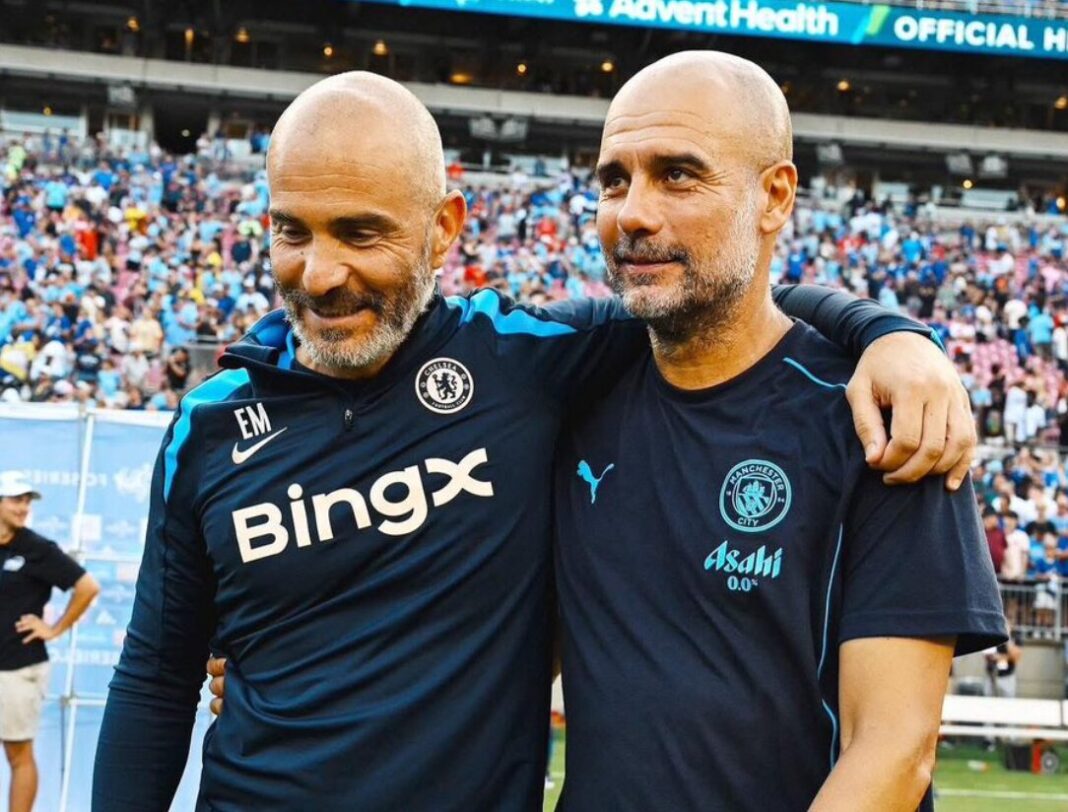
Pep Guardiola’s Manchester City era has always felt too complete, too dominant, too carefully constructed to end quietly.
For nearly a decade, City under Guardiola have not simply won trophies. They have shaped English football’s modern identity, forced rivals to rethink their entire approach, and turned excellence into something close to routine. But now, according to multiple reports, the most important managerial reign in Premier League history may be entering its final chapter.
Reports from MailSport, BBC Sport, and other outlets indicate that Guardiola plans to leave Manchester City at the end of the 2025/26 season, following City’s final Premier League match against Aston Villa. The club has not officially commented, but the growing expectation around the situation suggests a major announcement could be close.
If confirmed, it would mark the end of an extraordinary era at the Etihad.
And perhaps just as significantly, reports claim Manchester City have already settled on the next man. Enzo Maresca is said to be lined up as Guardiola’s successor, with terms agreed and no other candidates currently under consideration.
For City supporters, it is the kind of news that will take time to fully process. For the rest of football, it is a moment that could alter the balance of power in England.
The End of City’s Defining Era
Guardiola did not just manage Manchester City. He rebuilt the club’s footballing identity.
Before his arrival, City were already powerful, ambitious, and capable of winning major trophies. But Guardiola took them somewhere else entirely. He transformed them into a team defined by control, tactical intelligence, suffocating possession, and relentless standards.
Under him, City became the side everyone else measured themselves against.
Opponents did not merely prepare for a match against Manchester City. They prepared for an examination. Every press had to be perfectly timed. Every defensive line had to be disciplined. Every turnover had to be handled with care because one loose moment could become a goal within seconds.
That was Guardiola’s greatest achievement.
He made City feel inevitable.
The passing patterns, the positional rotations, the calmness under pressure, the ability to pin opponents deep inside their own half, all of it became part of a footballing machine that shaped an entire generation of Premier League tactics.
If this is truly the end, City are not just losing a manager. They are losing the architect of their modern greatness.
Why the Timing Feels So Significant
Guardiola leaving after the final league game against Aston Villa would give the moment a natural sense of closure.
Final-day departures can often feel ceremonial, but this one would carry far more weight. It would not simply be a goodbye after one season. It would be the conclusion of one of the most intense, successful, and influential managerial projects the game has seen.
The timing also suggests City may be trying to control the transition before uncertainty spreads too deeply.
Elite football clubs rarely get clean endings. Great managers often stay too long, or leave suddenly, or depart after a season has already collapsed emotionally. If Guardiola’s exit is being planned now, City appear determined to avoid chaos.
That matters because replacing Guardiola is not a normal managerial change.
This is not about finding someone to pick a team and organize training. This is about protecting an entire footballing ecosystem.
The next manager must inherit a squad built around specific principles, a club structure designed around Guardiola’s methods, and a fanbase accustomed to a level of dominance that is almost impossible to maintain.
That is why the reported Maresca plan makes sense.
Enzo Maresca and the Continuity Question
Enzo Maresca being lined up as Guardiola’s successor would be a clear signal from Manchester City.
They are not looking for revolution. They are looking for continuity.
Maresca understands the Guardiola school of football. He is familiar with the demands of positional play, structured possession, controlled pressing, and the psychological discipline required to dominate games rather than merely win them.
That background makes him a logical candidate, especially for a club that has spent years building every layer of its football operation around a specific style.
But logic does not remove pressure.
Replacing Guardiola may be one of the most difficult jobs in world football. Whoever follows him will not be judged fairly at first. Every tactical change will be compared. Every dropped point will be exaggerated. Every quiet spell will be framed as evidence that City’s aura has faded.
Maresca, if appointed, would inherit a squad filled with elite talent, but also a challenge shaped by impossible expectations.
At Manchester City, winning is no longer enough. The football has to feel convincing. The control has to return. The dominance has to look familiar.
That is the burden Guardiola leaves behind.
Sponsors Informed as Announcement Nears
Reports that Manchester City are informing sponsors of an imminent announcement add another layer of seriousness to the situation.
Clubs of City’s size do not handle major managerial changes casually. A Guardiola departure affects more than the dressing room. It touches commercial planning, global branding, player recruitment, supporter messaging, and the wider perception of the club’s future.
That is why silence from the club does not necessarily reduce the weight of the reports.
Manchester City may not have commented publicly yet, but behind-the-scenes preparation would be essential if a decision of this magnitude is close. Guardiola is not just another manager in the market. His departure would become one of the biggest football stories of the year.
The club will know that.
They will also know the announcement must be handled carefully.
What Guardiola Leaves Behind
The simplest way to describe Guardiola’s impact is trophies, but that still feels incomplete.
His real legacy at Manchester City is the standard.
He taught City to live under pressure every week. He made 90-plus-point seasons feel normal. He turned possession into control and control into intimidation. He demanded tactical perfection from players who were already world-class and somehow pushed them higher.
That is what separates great managers from era-defining ones.
Guardiola changed how Manchester City thought about themselves.
Before him, success was something the club chased. Under him, success became expectation. That psychological shift may be his most important gift to the club.
Even after he leaves, City will still carry that identity.
The question is whether anyone else can maintain it.
A Premier League Power Shift Could Follow
The wider Premier League will be watching closely.
For years, rival clubs have built plans around chasing Guardiola’s City. Liverpool, Arsenal, Chelsea, Manchester United, and others have all had to respond in different ways to the benchmark he created. His departure would not automatically weaken City, but it would create uncertainty.
And uncertainty is something rivals will try to attack immediately.
Players may wonder what comes next. Transfer targets may wait to see the direction of the project. Supporters may feel the emotional weight of change. Opponents may sense that the most intimidating force in English football is entering a vulnerable period.
That does not mean City will collapse.
Far from it.
The club’s structure remains powerful, the squad remains elite, and the reported Maresca succession plan suggests there is already a clear roadmap. But Guardiola’s presence has always provided something intangible.
Certainty.
Without him, even Manchester City may feel slightly more human.
A Goodbye Football Is Not Ready For
If the reports are confirmed, Guardiola’s final match against Aston Villa will become far more than a league fixture. It will become the closing scene of an era that changed Manchester City forever.
Supporters will remember the trophies. They will remember the great teams, the impossible comebacks, the tactical masterclasses, the title races, and the nights when City seemed untouchable.
But they may remember something else more deeply.
The feeling that every match under Guardiola had meaning because perfection was always being chased.
That is rare in football.
Managers leave. Clubs move on. New cycles begin. But some eras do not fade quickly because they reshape the sport around them.
Pep Guardiola’s Manchester City did exactly that.
And if this really is the end, English football is about to enter a future that suddenly feels wide open again.

